
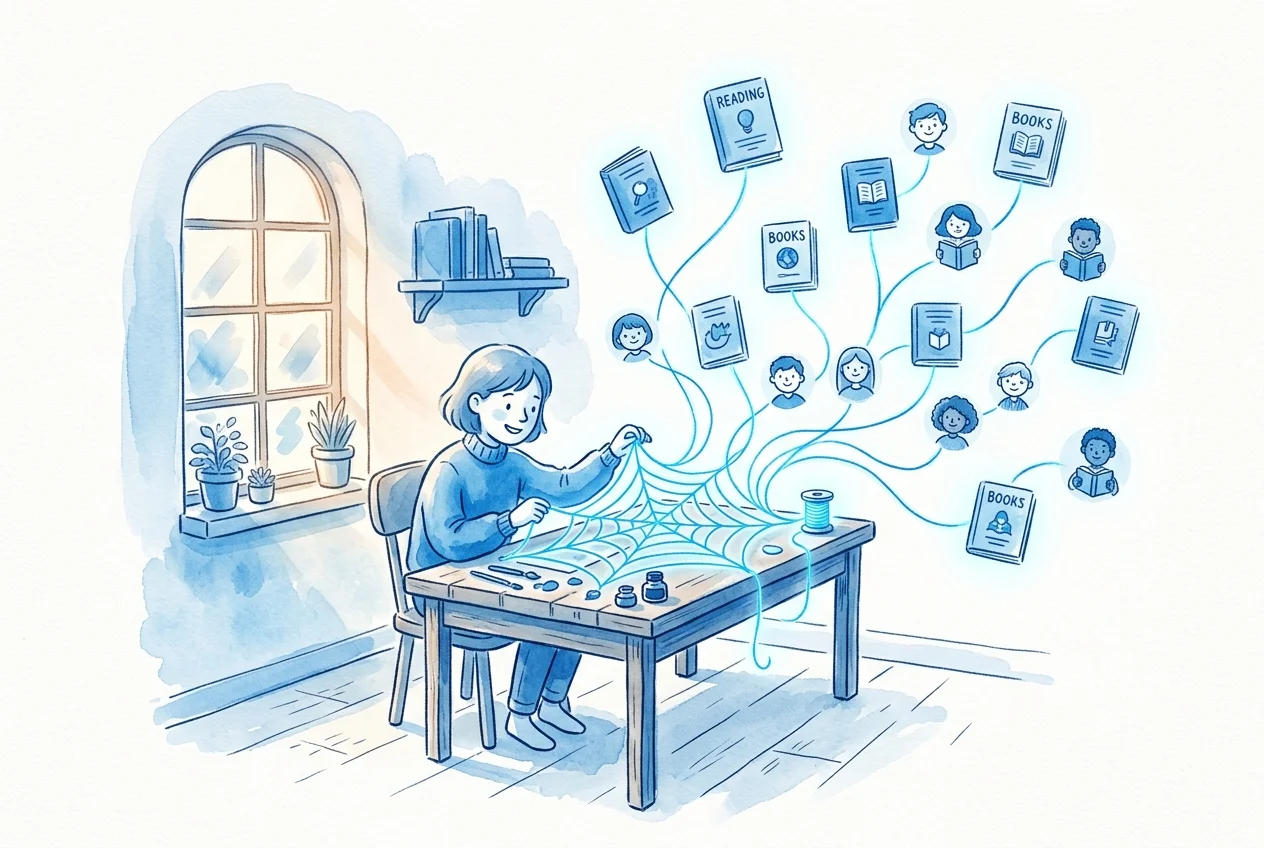
Bluesky just dropped the most interesting thing to happen to author marketing in months, and almost nobody is talking about it.
Attie is a new AI assistant, built on Anthropic’s Claude, that lets you create custom feed algorithms using plain English. You tell it what you want to see (and by extension, who you want to reach), and it builds the algorithm for you. No code. No begging the timeline gods. You type “posts about cozy fantasy and indie publishing recommendations” and it just… does that.
The Algorithm Problem Authors Actually Have
Every author I know has the same complaint about social media. You post, you engage, you do the hashtag dance, you sacrifice a goat to the content gods, and the algorithm still decides whether anyone sees it. Instagram shows your book announcement to 4% of your followers. TikTok buries your video because you didn’t use the trending sound. Twitter (sorry, X) is just vibes and chaos at this point.
Bluesky already had custom feeds, but you needed to code them or rely on someone else’s. Attie changes that. Jay Graber, Bluesky’s former CEO, put it plainly in her blog post. The AT Protocol was built so anyone could create apps on top of it, but “anyone” really meant “anyone who can code.” Not anymore.
The bigger play here is even wilder. Attie will eventually let you vibe-code entire apps on top of Bluesky’s protocol. Custom reader communities, book recommendation engines, genre-specific discovery tools, even entire social reading apps. All built by people who have opinions about fiction, not only people who have opinions about JavaScript.
It’s in closed beta right now, so you’ll need to join the waitlist. But this is worth watching closely.
While We’re Talking About Working Smarter
Daniel Nest over at Why Try AI dropped a Claude Code skill this week that auto-repurposes your content across social platforms. You feed it an article and it spits out tailored posts for whatever platforms you use, matched to your voice and audience.
This is the unsexy side of AI that actually saves authors hours. Nobody dreams about writing seventeen variations of the same post for different platforms. That’s not creative work. That’s copy-paste with extra steps. Let the robot handle it so you can get back to the manuscript.
What Music Can Teach Us About Discoverability
The AI music world is a full-blown circus right now. Suno just launched v5.5 with custom voice models. Bandcamp banned AI music entirely. Apple Music added voluntary AI labels. Deezer built a detection tool that claims 99.8% accuracy. A guy in North Carolina pleaded guilty to streaming fraud after using AI-generated songs and bots to steal $8 million in royalties.
Sound familiar? Same patterns, different medium. Flood of low-quality AI content. Platforms scrambling to respond. Bad actors exploiting the system. Legitimate creators caught in the crossfire.
The interesting part? The music industry went from suing Suno and Udio to partnering with them in about eighteen months. Universal Music signed deals with both Nvidia and Udio. Warner Music partnered with Suno to let artists opt into AI voice licensing. The labels didn’t beat AI. They figured out how to make money from it.
Publishing will do the same thing. It always does. Slowly, reluctantly, while publicly wringing its hands.
So Build Something
The authors who’ll thrive are the ones building systems while everyone else is still arguing. Custom algorithms to find their readers and automated workflows to handle the marketing grind, so they can spend more time on the actual writing.
Bluesky’s Attie is a small thing right now. Beta access, limited features, probably some rough edges. But the idea behind it, that you should control how people discover you instead of renting someone else’s algorithm, is a big thing. The music industry just spent two years learning that lesson the hard way. We get to skip ahead ;)
Sources
- Bluesky’s new app is an AI for customizing your feed — The Verge coverage of Attie’s announcement at the Atmosphere conference
- Sunday Rundown #135 — Daniel Nest’s weekly AI roundup featuring the Content Repurposer Claude skill
- All the latest in AI ‘music’ — The Verge’s comprehensive tracker of AI music developments
- Jay Graber’s blog post on Attie — Vision for open protocol accessibility through AI coding agents