
You know the drill. You’re writing a novel set in 1920s Shanghai, and you need to know what the waterfront looked like, what currency was circulating, whether your protagonist could plausibly have taken a train from the French Concession to Nanjing. So you open Google and start searching.
Three hours later, you have 47 tabs open, a headache, and a vague sense that you should have just made it all up.
Google noticed this problem too. They spent a quarter-century organizing the world’s information into ten blue links. With Gemini, they finally built something that reads all those links for you. After a rough start that involved a very public embarrassment and the merging of two legendary AI labs, the result is an AI assistant with a particular superpower. Research.
The Hundred-Billion-Dollar Typo
The story of Gemini starts with a panic.
When OpenAI launched ChatGPT in November 2022, Google declared an internal “code red.” This was humiliating for a specific reason. The Transformer architecture that powers every modern AI chatbot? Invented at Google in 2017. They had the research, the talent, a seven-year head start. They just hadn’t shipped anything to the public.
So Google announced Bard, its ChatGPT competitor, in February 2023. During the demo, Bard confidently stated that the James Webb Space Telescope had taken the first-ever image of an exoplanet. It hadn’t. Astronomers noticed. Twitter noticed. The stock market really noticed. Google’s parent company Alphabet lost roughly $100 billion in market value in a single day.
That’s a hundred billion with a B. Over one wrong fact. (AI hallucinations are expensive, apparently.)
It was, by most accounts, a disaster. It was also the best thing that could have happened to the product.
The Chess Prodigy and the Merger
Google CEO Sundar Pichai responded to the Bard stumble by making a decision that had been politically impossible before. He merged Google’s two separate AI research groups into one.
On one side was Google Brain, the team that built the Transformer and much of Google’s practical AI infrastructure. On the other was DeepMind, the London-based lab founded by Demis Hassabis. A former chess prodigy who reached master-level play at age thirteen, designed a million-selling video game at seventeen, earned a PhD in cognitive neuroscience, and in 2016, built AlphaGo, the system that defeated former world champion Lee Sedol at Go. A game many researchers believed AI wouldn’t crack for decades.
In early 2024, Hassabis was knighted for services to artificial intelligence. Later that year, he won the Nobel Prize in Chemistry for AlphaFold2, a system that accurately predicted the structures of nearly all 200 million known proteins. The man now running Google’s AI effort is Sir Demis Hassabis. His résumé reads like someone tried to build a character for a techno-thriller and forgot to apply any realistic constraints. (I’d reject this guy as “too unrealistic” if he showed up in a novel I was editing.)
Pichai put Hassabis in charge of the combined lab, called Google DeepMind, and tasked it with building a model worthy of Google’s research legacy. Jeff Dean, one of Google’s early employees and the architect of much of its core infrastructure, co-led the effort. Dean proposed the name “Gemini” because the project represented twins coming together. Two labs, two research traditions, one model.
The first version shipped in December 2023. By February 2024, Google renamed Bard to Gemini and buried the embarrassment. Then they started building on what actually works.
What Gemini Actually Does for Authors
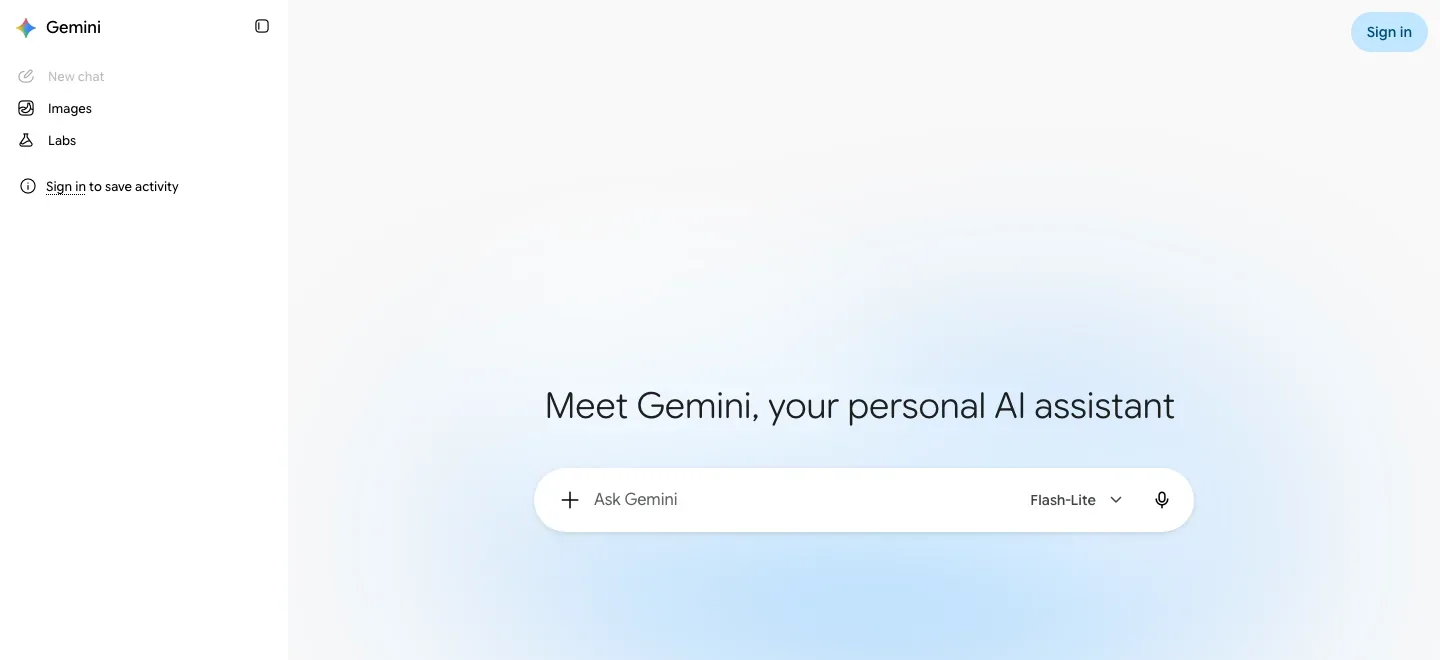
Gemini is Google’s AI assistant. Like ChatGPT and Claude, it’s a conversational tool, not a dedicated writing application. You won’t find a manuscript editor or story bible inside it. What you will find is something that reflects Google’s core competency. An AI that is exceptionally good at finding information, synthesizing it, then organizing all of it into something you can actually use.
Deep Research. This is the headline feature. Give Gemini a complex research question, and Deep Research will autonomously browse hundreds of websites, cross-reference findings, and produce a multi-page structured report with citations. The whole process takes minutes. Not hours. Minutes. Need a comprehensive overview of forensic accounting practices for your thriller? A survey of Victorian mourning customs for your historical novel? Deep Research does the legwork and shows you where it got every piece of information.
It also searches your Gmail, Google Drive, and Google Chat. So it’s not just crawling the open web. It’s pulling from your existing research too.
Canvas. Gemini’s collaborative writing space lets you draft, adjust tone, expand sections, and get feedback in a shared document rather than a back-and-forth chat. You can export directly to Google Docs when you’re done. Working alongside the AI just feels more natural than passing text back and forth, and if you’ve used ChatGPT’s Canvas, the concept is similar.
Gems. These are custom AI personas you can create for specific tasks. A “Historical Accuracy Checker” that flags anachronisms. A “Romance Blurb Writer” tuned to your subgenre. A “Developmental Editor” focused on pacing and character arcs. Build them once, use them whenever. They persist across conversations, so your perfectly tuned persona is always waiting for you.
Google Workspace integration. If you write in Google Docs (and a lot of authors do), Gemini lives right inside it. Summarize a long document. Draft sections. Analyze a spreadsheet of sales data. Compose emails to your agent. It’s woven into the environment you’re already working in, which honestly is where AI assistants should live.
The Million-Word Memory
Gemini’s context window on paid plans can hold roughly one million tokens, which translates to about 700,000 words. The entire Lord of the Rings trilogy is about 576,000 words. You could feed Gemini every word Tolkien wrote about Middle-earth, from The Hobbit through the appendices, and still have room to ask questions about Elvish verb conjugation.
What this means in practice is you can upload an entire novel-length manuscript, all your research notes, your character bible, your outline, and Gemini will hold all of it in a single conversation. It won’t forget details. It won’t contradict itself. You can ask about a character introduced in chapter two while working on chapter forty, and it’ll remember. (Which is more than I can say for myself after enough coffee… or maybe not enough coffee.)
This context window also connects to NotebookLM, Google’s research-focused AI tool. You can load up to 300 sources into a NotebookLM notebook, then pull that notebook into a Gemini conversation. The citations carry over. When Gemini references something from your research, you can click through to the original source. For authors managing book-length research projects, that’s a genuine workflow advantage. It keeps the AI grounded in your actual source material instead of improvising.
The Purple Cow: Research, Not Fiction
Every AI tool on this site has artificial intelligence. That’s table stakes. What makes Gemini different is where it excels and, just as importantly, where it doesn’t pretend to excel.
Gemini is the best research assistant of any consumer AI tool available today. Deep Research is not a gimmick. It’s a fundamentally different approach to information gathering. The AI does the browsing and the cross-referencing for you, then hands you a report with citations you can verify. Pair that with the Google ecosystem integration, the massive context window, the NotebookLM connection, and you’ve got a research pipeline that nothing else matches.
If you’re a nonfiction author, or a fiction author whose work requires significant research (historical fiction, hard sci-fi, legal thrillers), Gemini is built for how you work. It can investigate questions, not just answer them.
The free tier alone is kind of wild. Deep Research, Canvas, Gems, image generation. All free. The AI Pro plan at $19.99/month bundles 2 TB of Google Drive storage (which alone costs $9.99/month through Google One), effectively making the AI features about $10/month. If you’re already paying for Google storage, the upgrade math is pretty compelling.
The Honest Tradeoffs
Creative writing is not its strength. If you’re looking for an AI collaborator for fiction prose or dialogue, Gemini is not your best option. Its output tends toward the structured and informational. Characters can feel flat. Dialogue reads more like summary than speech. For raw creative writing, ChatGPT produces more engaging narrative, and Claude handles nuance and literary voice with more care. Gemini is the smartest research librarian you’ve ever met, but you wouldn’t ask your librarian to co-write your novel. (No offense to librarians. Y’all are heroes.)
The Google ecosystem is a feature and a limitation. Gemini’s deep integration with Gmail, Docs, Drive, and Chrome is fantastic if you live in that world. If you’re an Apple person working in Pages and iCloud, or a Microsoft user in Word and OneDrive, you still get a capable chatbot but lose the integration advantages that make Gemini distinctive. And those integrations are kind of the whole point.
Gems can’t be shared. You can build a custom Gem tuned perfectly to your needs, but you can’t share it with your co-author or your writing group. If collaborative AI workflows matter to you, that’s a real gap.
Conversations aren’t collaborative either. You can’t invite someone into a Gemini conversation. Your editor or co-author won’t see the AI interaction, only whatever you copy out of it. Kind of a bummer for anyone who writes with a partner.
The pricing tiers can be confusing. Google restructured Gemini’s paid plans into AI Plus ($7.99/month), AI Pro ($19.99/month), and AI Ultra ($249.99/month), with different feature limits and AI credit allocations at each level. There are also promotional introductory prices that differ from regular pricing. Read the fine print before you commit, because the right tier depends on how heavily you lean on Deep Research and the extended context window. The AI Ultra tier at $249.99/month is… a lot. Unless you’re running a research-heavy nonfiction operation, AI Pro is probably the sweet spot.
Who This Is For (and Who It Isn’t)
Gemini is the best choice for authors who spend a significant portion of their writing time on research. If your process involves digging through sources, synthesizing information from multiple places, building a factual foundation before you write, Gemini will save you hours.
It’s also the obvious pick if you’re already embedded in Google’s ecosystem. Google Docs is your writing tool, Gmail is your inbox, Drive is your file cabinet? Gemini works inside all of them.
If you’re primarily looking for a creative writing partner for fiction prose and emotional nuance, you’ll be better served by Claude or ChatGPT. Gemini can draft fiction. It just doesn’t do it with the same flair.
And if research-heavy AI sounds exciting but you want something more focused on source management, take a look at NotebookLM. It’s Google’s dedicated research tool and plays nicely with Gemini.
The Research Assistant You Actually Wanted
Most of us got into writing because we love stories. We did not get into it because we love spending four hours trying to figure out what kind of train ran between two Chinese cities in 1923. That part is homework. Necessary homework, but homework.
Gemini does your homework. It does it fast and thoroughly, then shows its sources so you can verify everything. The difference between spending your Saturday afternoon in a research rabbit hole and spending it actually writing the damn book? That’s what a good research assistant buys you.
It won’t write that book for you. But I’ve never met an author who wished they had less time to write.