
Perplexity: The AI Research Librarian Who Shows Their Work

By Morgan Paige Published February 27, 2026
Perplexity logo

Google has been broken for years and we all just… accept it? You type in a perfectly reasonable query, something like “what did a 1935 Oklahoma farmhouse kitchen look like,” and you get fourteen recipe blogs, a Wikipedia article edited by god-knows-who, a Pinterest board of “rustic farmhouse aesthetic” images from 2019, and exactly zero useful primary sources.

Forty-five minutes of tab-sifting later, you’ve found one dead link to an academic paper and one promising result with no author or date. Your writing momentum is toast. Your coffee is cold.

Perplexity exists because someone finally decided to fix this.

The Boring Revolution

Aravind Srinivas bet on the most unglamorous problem in tech. While half of Silicon Valley was chasing crypto and social apps in 2022, Srinivas (PhD from UC Berkeley, with research experience at OpenAI and DeepMind) was fixating on something most people considered already solved. Search.

It wasn’t solved. It was just familiar.

Google had dominated search for over two decades, and its fundamental model hadn’t changed. You type words, you get links, you click through them one by one until you find what you need. The arrival of large language models like GPT-3 created a weird gap. These models were great at synthesizing information but prone to hallucination, and they couldn’t access anything published after their training cutoff. Meanwhile, search engines could find current information but just dumped raw links on you without synthesizing anything.

Srinivas saw the obvious combination. What if you had a tool that searched the live web like Google, then synthesized what it found like a language model, and (this is the crucial part) showed you exactly where every piece of information came from?

In August 2022, he co-founded Perplexity with Denis Yarats (formerly of Meta AI), Johnny Ho (formerly of Quora), and Andy Konwinski (co-founder of Databricks). One early product was a quirky thing called Bird SQL that let users query Twitter data using natural language. When Twitter killed its free API access, Bird SQL died with it, and the team doubled down on their bigger vision.

Rather than chasing the “build the most powerful AI” race, they focused on what Srinivas calls an “answer engine.” Not a chatbot or a writing tool. A system that finds information and shows exactly where it came from.

What Perplexity Actually Does

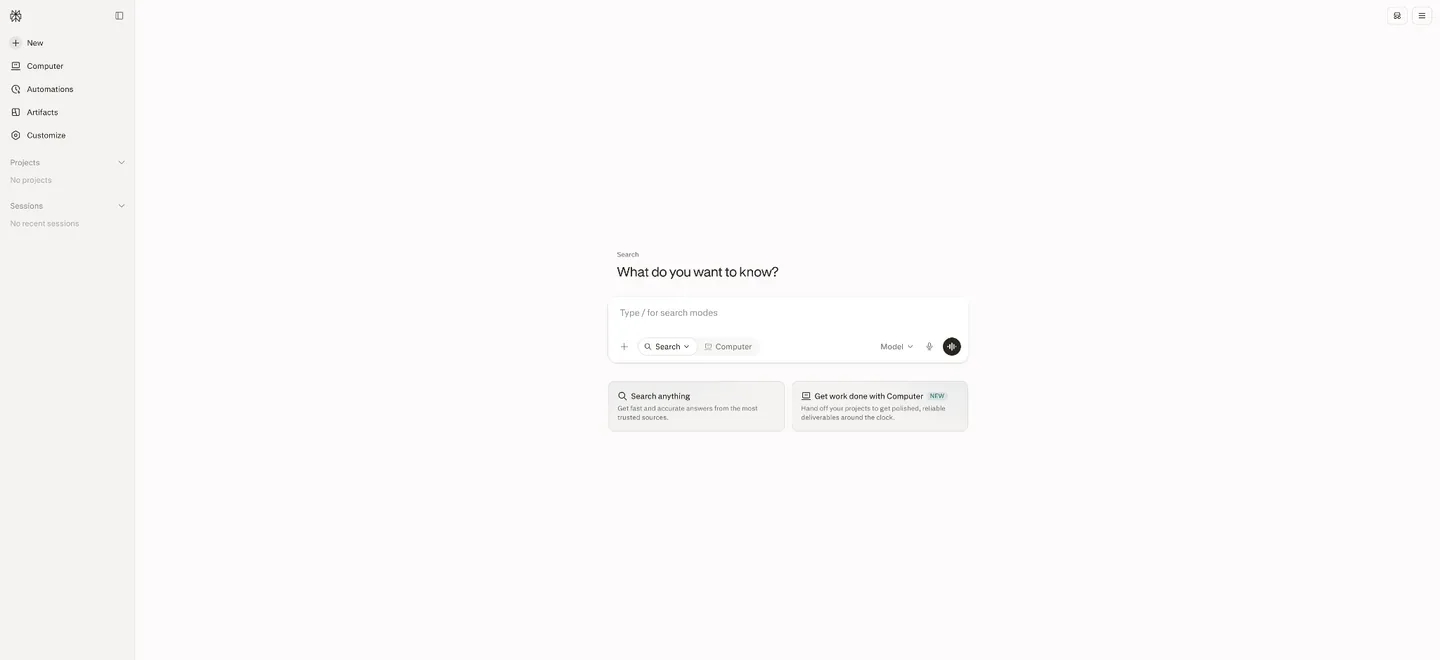
Ask Perplexity a question and something different happens compared to ChatGPT or Claude. Before it says a word, it searches the web. You can watch it happen. A list of sources appears at the top of the response, numbered and clickable, and the answer that follows is threaded with inline citations linking back to those sources.

That one difference changes everything about how you use it.

When you ask ChatGPT “What was the literacy rate in 1920s rural Appalachia?”, you get a confident answer drawn from whatever was in its training data. It might be accurate. It might not. You can’t verify it without doing your own research anyway. When you ask Perplexity the same question, it searches the web, pulls from academic databases and historical archives, synthesizes an answer, and gives you numbered footnotes you can click to read the original sources yourself.

For authors, this changes the research workflow in some genuinely useful ways.

Fact-checking with receipts. Writing historical fiction and need to verify a detail is period-accurate? Perplexity doesn’t just tell you, it shows you where it found the information. You can follow the citation and decide for yourself whether the source is credible. This matters when your editor asks “where did you get that?” and you need a better answer than “an AI told me.” (Editors love that one. Kidding. They absolutely hate it.)

Source discovery. Instead of spending hours evaluating Google results, Perplexity surfaces the most relevant sources and summarizes their content. You can filter searches by type, too. Academic papers only, YouTube only, or the full web. Researching for nonfiction and you know the good stuff is in academic literature? Tell Perplexity to look only there.

File analysis. Upload a PDF or a Word document and ask questions about it. Drop in your beta reader feedback and ask Perplexity to identify the most common concerns. Upload a competitor’s book sample and ask what themes they emphasize.

Ongoing research threads. Perplexity maintains conversation threads around a topic, so you can build up research incrementally. Start broad with Victorian-era medical practices, narrow down to specific surgical tools, and Perplexity keeps context through the whole thread as you go deeper.

Citations as a Feature, Not an Afterthought

Every major AI chatbot can search the web now. So what makes Perplexity different?

The difference is architectural. ChatGPT and Claude are fundamentally language models that can optionally search the web when they think it would help. Perplexity was designed from the ground up as a search engine that uses AI to synthesize results. It searches the web on nearly every query, by default, without you asking.

The citations aren’t some feature bolted on after the fact. They’re the foundation. A study by the Tow Center for Digital Journalism found that Perplexity had the lowest rate of incorrect citations among the AI search tools they tested. Not perfect (more on that in a second), but clearly the team has been optimizing for the thing that matters most when you’re doing real research. Can I trust this, and can I verify it?

There’s another feature that matters for authors and doesn’t get enough attention. Perplexity is model-agnostic. Pro subscribers can switch between Perplexity’s own Sonar models, GPT, Claude, and Gemini, all within the same interface. You’re not locked into one AI’s perspective. Need Claude’s nuance for analyzing a character motivation? Switch to it. Need GPT’s breadth for brainstorming? Go for it. No other AI tool gives you that flexibility without opening a different app.

What It Doesn’t Do

Perplexity is not trying to be your writing partner. Don’t sign up expecting one.

It won’t help you draft prose. Perplexity’s output is functional and a little academic. It reads like well-organized research notes, not like fiction. If you need help with dialogue or scene construction, ChatGPT and Claude are significantly better choices. Perplexity is the research step that happens before the writing.

Creative tasks aren’t its strength. Ask it to brainstorm plot twists or develop a character arc and you’ll get competent but uninspired suggestions. If you want a creative sparring partner, look elsewhere.

The accuracy is good, not perfect. Perplexity’s citation quality leads the field, but studies have found it still gets things wrong in a meaningful percentage of cases. The citations give you a head start on verification, but they don’t replace it. Always click through on facts that matter to your manuscript. Trust but verify. (Actually, just verify.)

It needs the internet. Perplexity searches the live web for every query. No wifi, no Perplexity. If you write in a cabin with spotty connectivity, this tool will absolutely let you down at the worst possible moment.

No writing or publishing tools. No manuscript formatting or chapter organization. No export to ePub. Perplexity produces answers and citations. What you do with them is up to you.

The Pricing Reality

Perplexity’s free tier is genuinely useful. You get unlimited quick searches with citations, plus a limited number of “Pro” searches per day that use more powerful models for deeper analysis.

Pro at $20/month (or $200/year) unlocks unlimited searches, access to all the model options, file uploads, and deeper research capabilities. For authors who do substantial research, this is where Perplexity becomes a daily driver rather than an occasional experiment.

Max at $200/month gives you unlimited access to every advanced model with no restrictions. Unless you’re doing full-time research or running a content operation, it’s overkill.

Side note for students and educators. Perplexity offers an Education Pro plan at 50% off ($10/month). Worth knowing about if you’re writing academic nonfiction or finishing a thesis.

Who This Is Really For

Perplexity fills a specific gap in the author’s AI toolkit, and it fills it surprisingly well.

Nonfiction authors get the most obvious value. If your work depends on sourced, verifiable facts, Perplexity replaces hours of manual research with focused, cited conversations. History, science, business, self-help, memoir that intersects with real events. All of it.

Historical fiction writers who need period-accurate details will love having a tool that doesn’t just answer your question but shows where the answer came from. Was gaslight common in middle-class London homes by 1860? Perplexity will tell you and let you check for yourself.

Self-publishing authors doing market research or tracking genre trends will find the source-filtering feature particularly useful. Point it at news sources to see what’s trending, or at academic sources to ground your nonfiction claims.

Authors doing any kind of research will benefit from a tool that treats “where did you get that?” as a feature rather than an annoyance.

If you’re a fiction writer looking for a creative collaborator or brainstorming partner, this isn’t your tool. ChatGPT and Claude handle that better. But those tools can’t do what Perplexity does either. They generate answers from memory. Perplexity goes and finds them fresh, with receipts.

Similar Tools